Over 60% of first-time salon clients never come back for a second appointment when there's no automated rebooking or loyalty system in place. That single number is why loyalty isn't a "nice to have" for a beauty business — it's the cheapest growth lever most salons aren't pulling.
This guide breaks down exactly how salon loyalty programs work, the five models worth considering, the real financial math behind each one, and how to avoid the discount traps that quietly erode margins. If you run a hair salon, nail studio, spa, or barbershop, you'll walk away knowing exactly which model fits your chairs and what it should cost you to run.
What's in this guide
1. What a Salon Loyalty Program Actually Is
Salon loyalty is a structured retention strategy that rewards clients for booking services, buying retail products, rebooking, or referring friends — usually through points, digital stamps, or tier status. Once it's set up, a good program runs itself: it's an automated engine that brings clients back without you spending anything extra on ads.
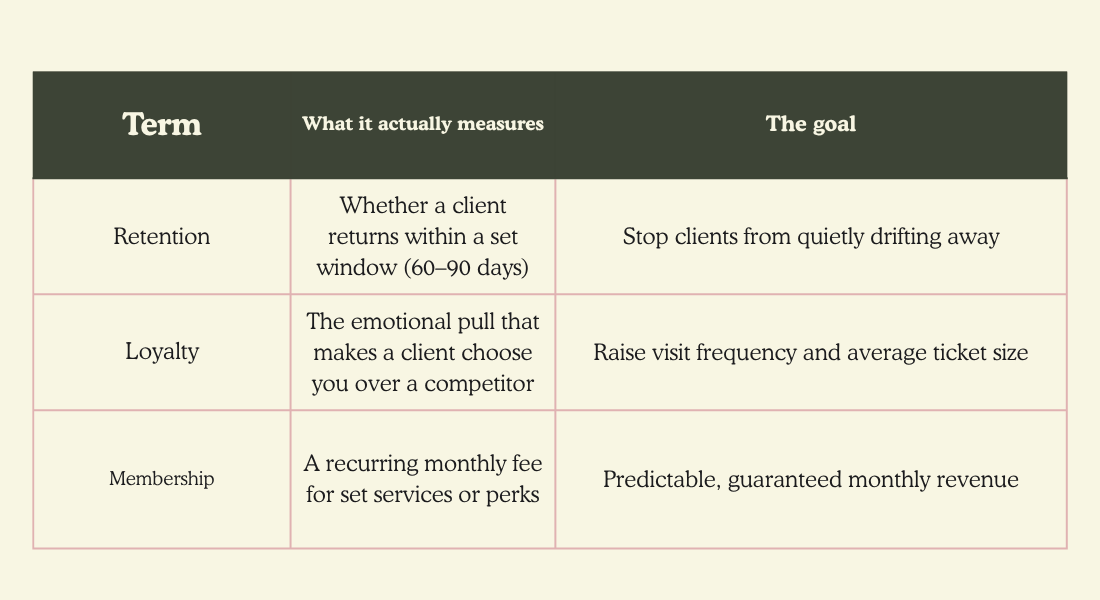
People often use "loyalty," "retention," and "membership" interchangeably, but they solve different problems:
2. Why Retention Beats New-Client Acquisition
Bringing in a new client costs real money — ad spend, intro discounts, staff time. Keeping an existing one almost always costs less and pays more.
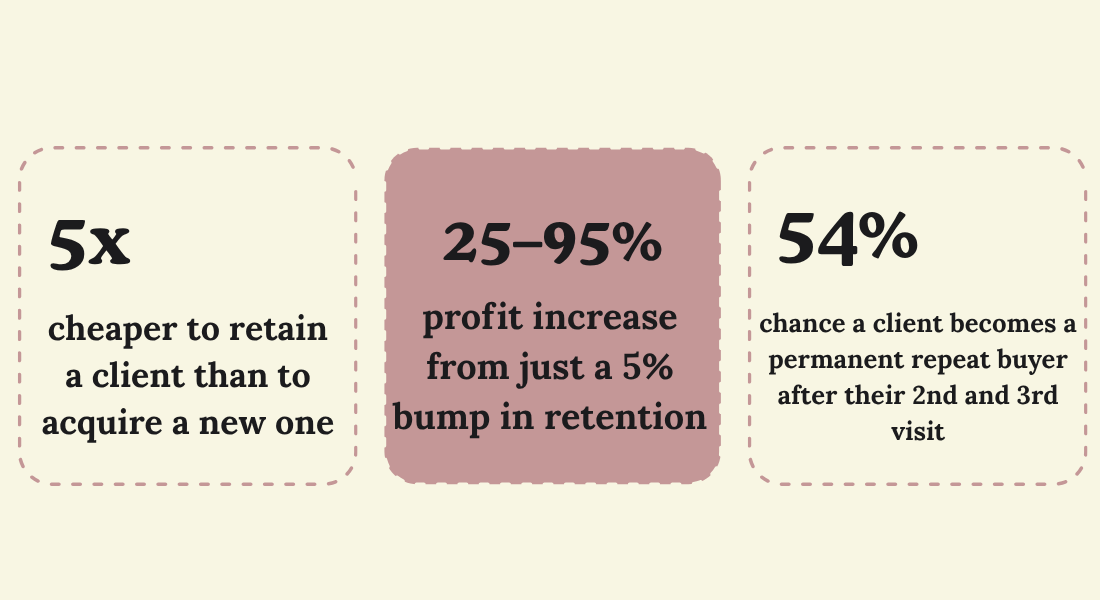
The appointment gap for hair color or skin treatments — typically 6 to 10 weeks — is a real risk window. Every week a client goes without hearing from you is a week a competitor's ad might catch them instead. And clients who do stick around aren't just loyal, they're more profitable: retained clients trust your recommendations, so they buy more retail, add on more services, and spend less time price-shopping.
3. Five Salon Loyalty Models, Compared
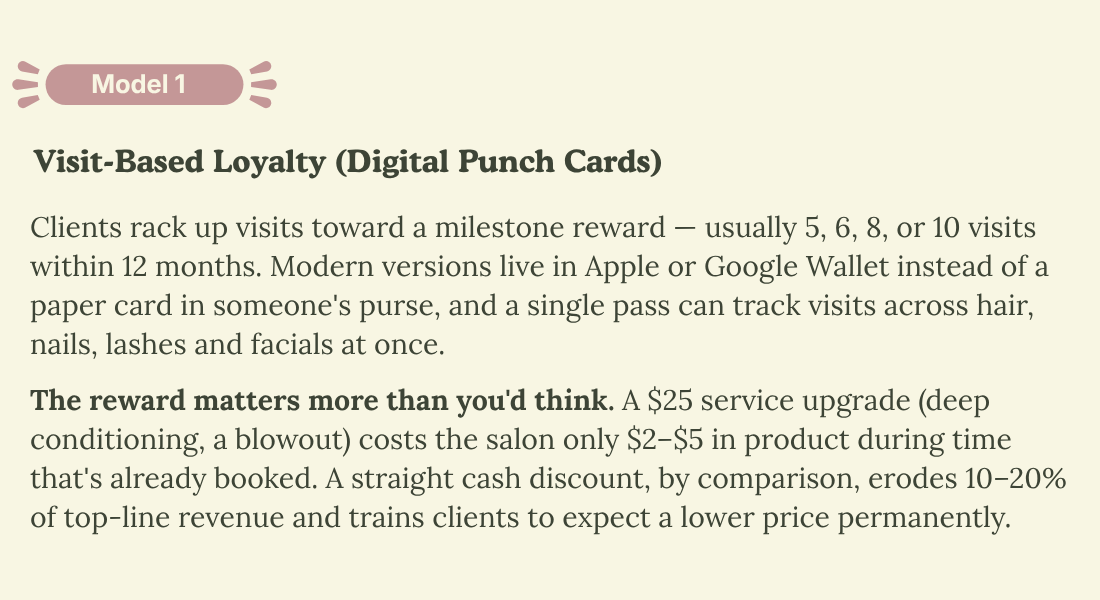
There's no single "right" loyalty program. The best salons usually stack two or three of these once the first one is running smoothly. Here's how each works, what it costs, and when it makes sense.
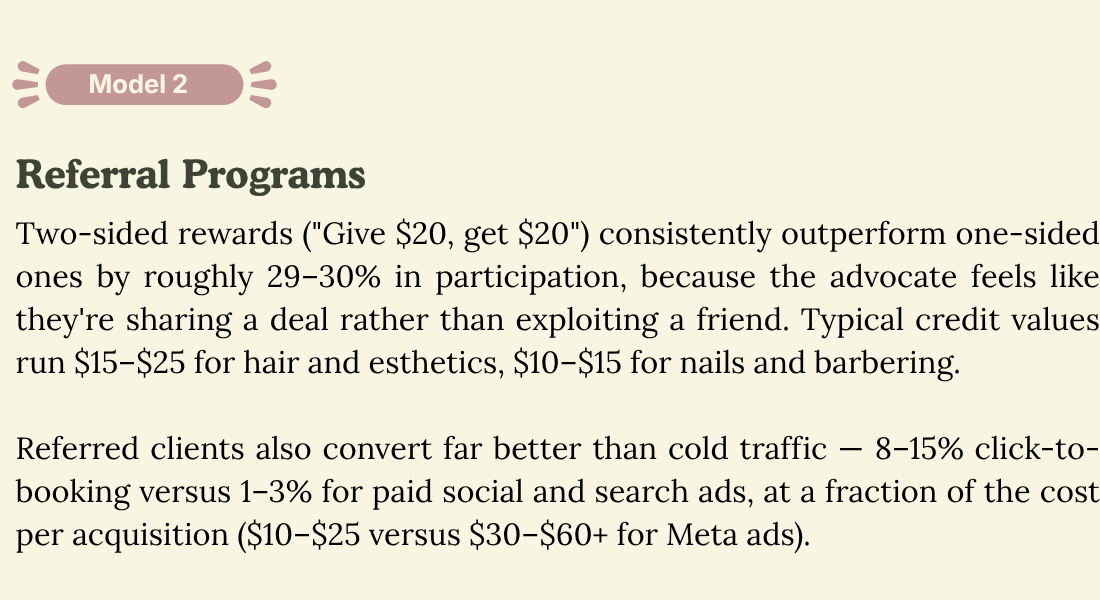
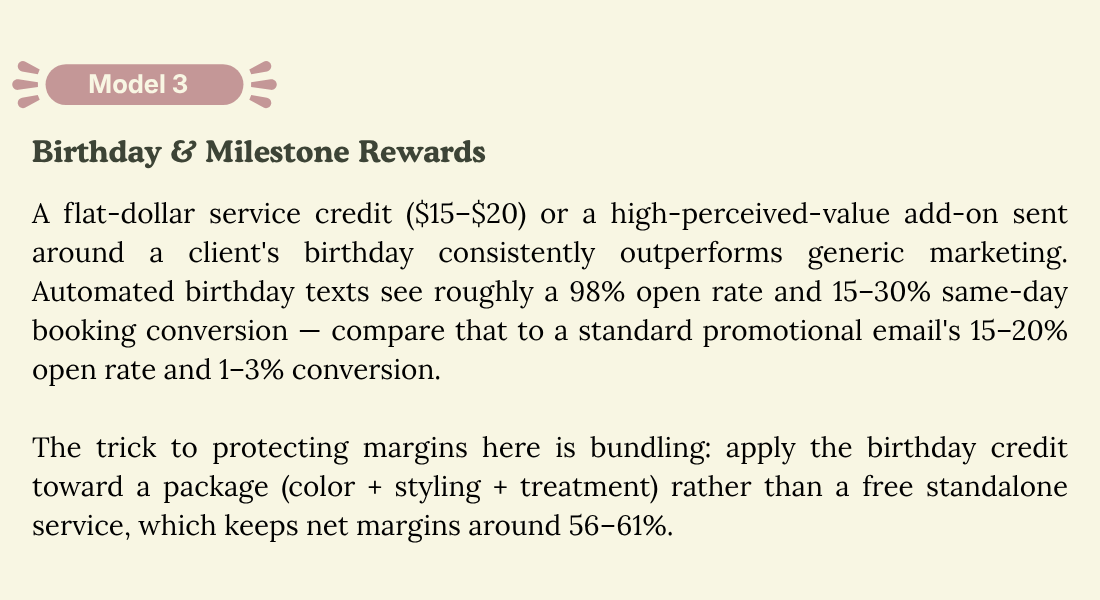
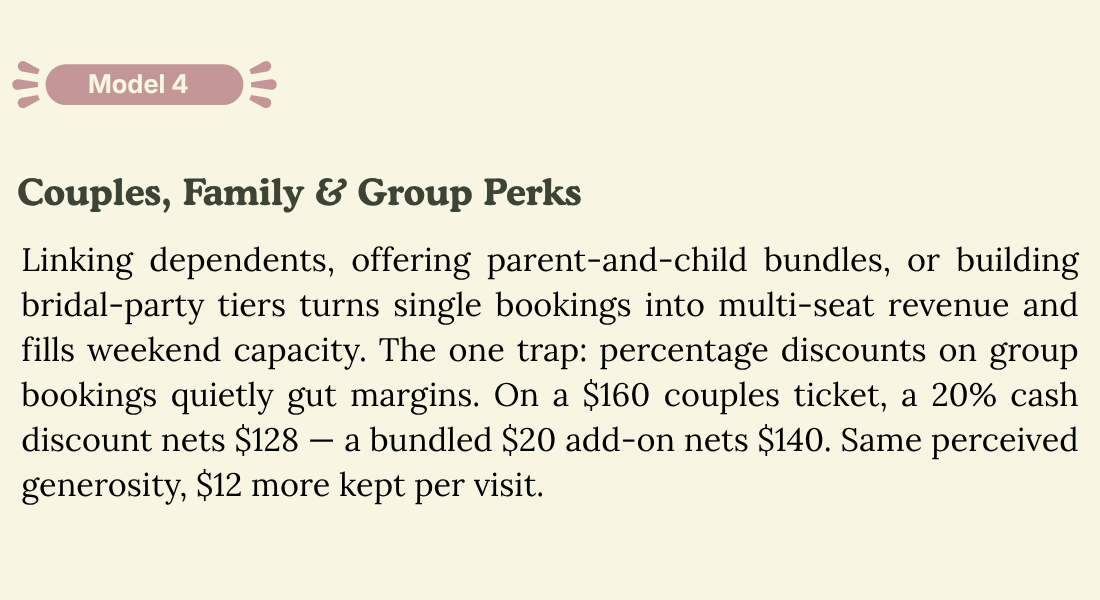
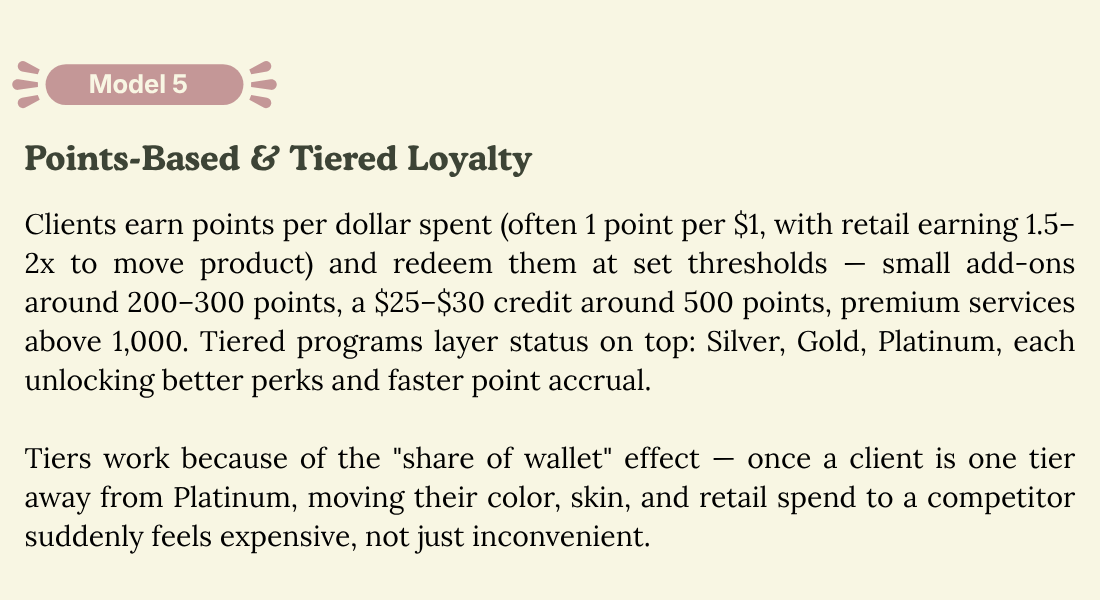
"Loyal clients who visit more than once a year generate roughly 80% of total salon revenue — the program doesn't need to be complicated, it just needs to run every time, automatically."
4. How Digital Loyalty Actually Works Behind the Scenes
A modern loyalty program isn't a card in a drawer — it's a live data loop. A client books, the POS logs the completed visit, the system scores their churn risk against their own visit pattern, and if they're overdue, drifting, or hitting a milestone, an automated text or email goes out without anyone at the front desk lifting a finger.
Behind that loop, salon software is quietly tracking things like: last visit date, expected next visit (predicted from that client's own booking cadence), preferred stylist, loyalty point balance, referral history, and marketing consent. The best platforms use this to flag a "high risk" client the moment they drift past their personal average gap — not a generic 90-day rule that catches problems too late.
5. The Metrics That Actually Tell You If It's Working
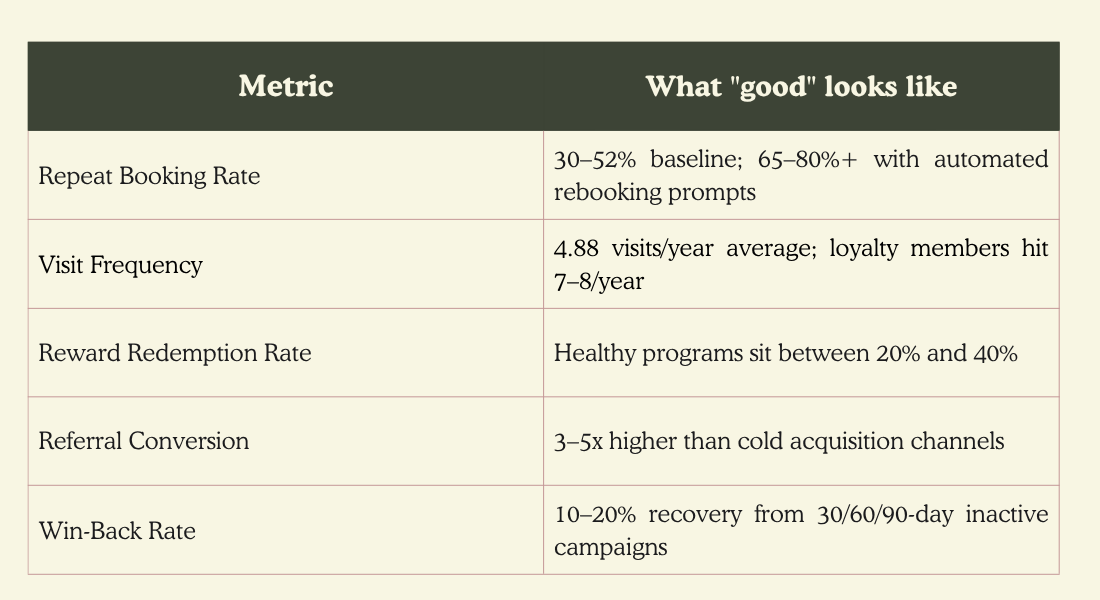
A quick, real-world ROI example: a program costing $2,500/month in software, rewards, and marketing that generates $5,500 in attributable frequency and upsell gains returns roughly 120% ROI. That's the bar to hold your own numbers against.
6. Protecting Your Margins
The fastest way to make a loyalty program unprofitable is handing out cash discounts. Here's the hierarchy, safest to riskiest:
- Free service add-on — a scalp massage or deep conditioning treatment, minimal cost, high perceived value.
- Retail or store credit — keeps the spend inside your business and moves higher-margin product.
- Direct cash discount — the most damaging option; it cuts revenue directly while your labor cost stays exactly the same.
Keep the total value of any reward capped between 3% and 5% of what the client actually spends, restrict high-value redemptions to off-peak hours, and use rolling expiration windows (12–24 months of inactivity) so unredeemed points don't sit on your books as a permanent liability.
7. Choosing Loyalty Software
Most modern booking platforms now bundle some form of loyalty tracking. A rough guide to where each one shines:
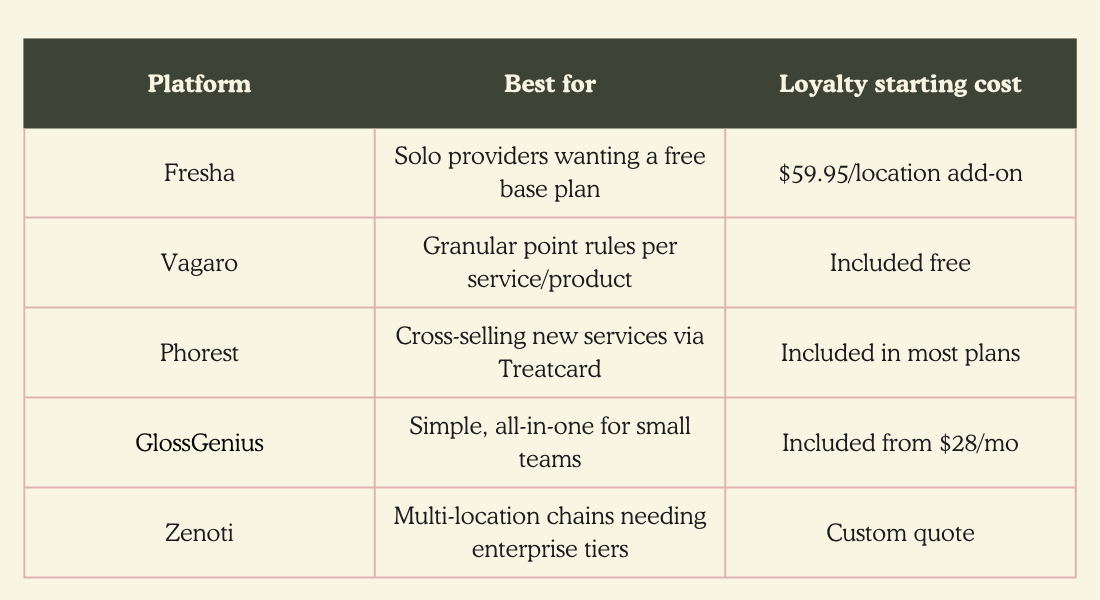
Whatever you pick, the non-negotiables are: automatic point/stamp tracking at checkout (no manual staff entry), wallet-based passes so clients don't need to download an app, and built-in birthday and win-back automations so the program runs without daily attention.
Not sure which model fits your salon?
The free Cher Salon Audit breaks down your current retention gaps and shows you exactly which loyalty model would move the needle first — no pitch, just the numbers.
Get my free audit →FAQ
What is the best type of loyalty program for a small salon?
For most independent salons, a digital visit-based punch card (5 or 6 visits for a service upgrade) is the easiest to launch and the cheapest to run, since it lives in Apple or Google Wallet with no app download required. A two-sided referral program is usually the next addition once the punch card is live.
Do salon loyalty programs actually increase revenue?
Yes — when rewards are structured as service upgrades or product credit rather than cash discounts. A 5% lift in retention can raise total salon profitability by 25% to 95%, and enrolled loyalty members typically generate 12% to 25% higher annual revenue than non-members.
Should salon rewards be cash discounts or free services?
Free service upgrades or product credit protect margins far better than cash discounts. A cash discount reduces top-line revenue directly, while a service add-on like a scalp massage or deep conditioning treatment costs the salon only a few dollars in consumables during time that's already booked.